
Introduction
Every piece of jewelry begins with an idea. It might be a simple pencil sketch, a reference photograph, a unique gemstone, or a design concept developed for a new jewelry collection. Turning that idea into a finished product requires creativity, technical knowledge, skilled craftsmanship, and careful planning.
For jewelry designers, retailers, and emerging brands, understanding the custom jewelry manufacturing process makes it easier to develop original products, manage production costs, and maintain consistent quality.
At Shri Shyam Gems & Jewellery, we understand the importance of bringing a designer’s vision to life while considering the practical requirements of manufacturing. From initial design discussions to production and finishing, every stage contributes to the appearance, functionality, and overall quality of the final piece.
In this guide, we explore how a jewelry design moves from a sketch to a finished product and what businesses should consider when working with a custom jewelry manufacturer.
What Is Custom Jewelry Manufacturing?
Custom jewelry manufacturing is the process of developing jewelry according to specific design requirements rather than selecting an existing, ready-made product.
A brand might want to create a distinctive gemstone pendant, a collection of sterling silver rings, a pair of detailed earrings, or an entirely new jewelry line. A manufacturer works with the brand to understand the concept and translate it into a design that can be produced.
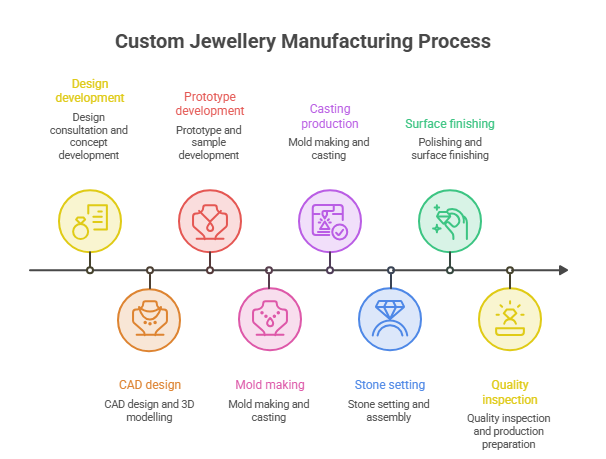
Depending on the project, the process may involve:
- Design development and technical drawings
- Jewelry CAD design and 3D modeling
- Prototype or sample development
- Metal preparation, casting, or fabrication
- Gemstone selection and setting
- Polishing, plating, and surface finishing
- Quality inspection and final packaging
The exact manufacturing route depends on the design, material, construction, quantity, and finishing requirements.
Step 1: Turning an Idea into a Jewelry Design
The first stage begins with understanding the concept.
Some clients provide detailed technical drawings, while others share inspiration images, hand-drawn sketches, or photographs of existing jewelry. In some cases, the project begins with a gemstone that inspires the entire design.
During this stage, the manufacturer and designer discuss the intended appearance, dimensions, materials, gemstone requirements, target price, and expected order quantity.
For example, a designer developing a blue flash moonstone pendant may want a minimal silver setting that highlights the stone. Another brand may prefer an intricate pendant featuring decorative metalwork and multiple gemstones.
Both concepts require different manufacturing considerations.
A clear design brief helps establish expectations before development begins. It also reduces misunderstandings during sampling and production.
What brands should prepare: Reference images, approximate dimensions, preferred metal, gemstone details, target quantity, finish requirements, and budget.
Step 2: Developing the Design Through CAD Modeling
Once the concept is understood, the next stage is often CAD jewelry design.
CAD stands for Computer-Aided Design. It allows designers to create a detailed three-dimensional model of the proposed jewelry piece before physical manufacturing begins.
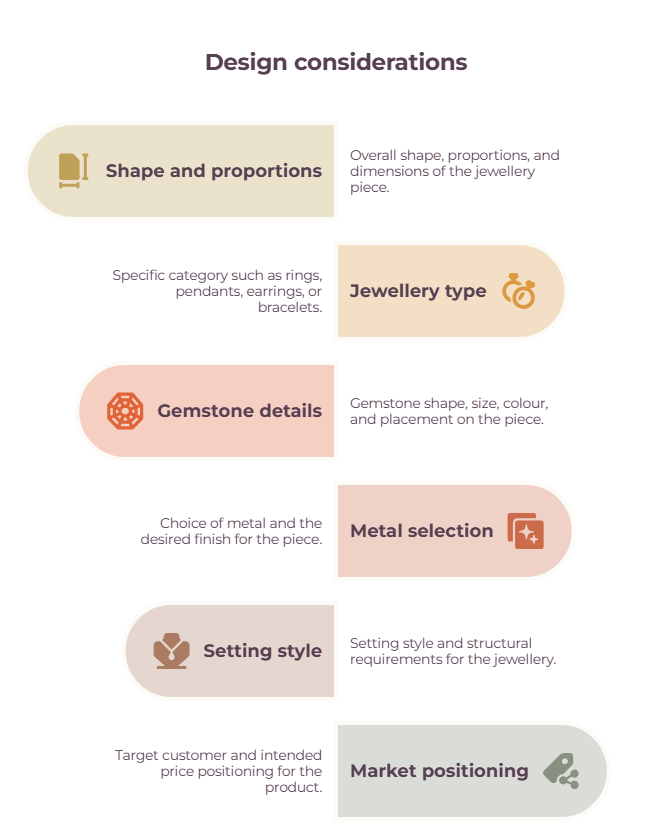
A CAD model can help define:
- Overall dimensions and proportions
- Gemstone positions and setting structure
- Metal thickness and construction
- Decorative elements and surface details
- Connections, clasps, and other functional components
For a jewelry brand, this stage is especially important because a design that looks attractive in a photograph may require adjustments before it can be manufactured reliably.
For example, a pendant with a large gemstone and a delicate frame may need structural adjustments to support the stone while preserving the intended appearance.
The CAD model allows these considerations to be reviewed before moving to the next stage.
Why CAD Approval Matters
The digital design provides an opportunity to identify changes early. Adjustments to proportions, stone placement, or decorative details are generally easier to evaluate before a physical sample is produced.
Brands should review the dimensions, gemstone size, setting style, and overall design carefully before approving the model.
For custom projects, clear approval records also help ensure that subsequent manufacturing follows the agreed design.
Step 3: Creating a Prototype or Master Model
After CAD approval, the next step depends on the manufacturing method selected for the piece.
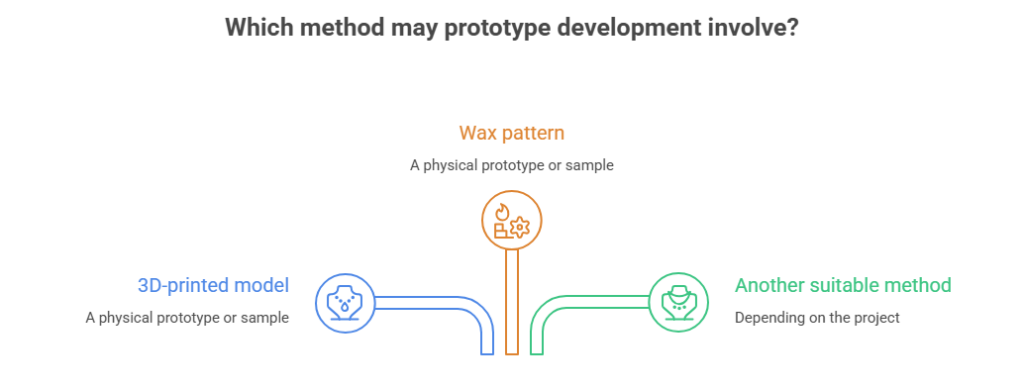
For many cast jewelry designs, a wax or castable resin model can be produced from the digital file. This creates a physical representation of the design that can be used in the casting process.
A prototype can help evaluate the design’s proportions, construction, and overall appearance.
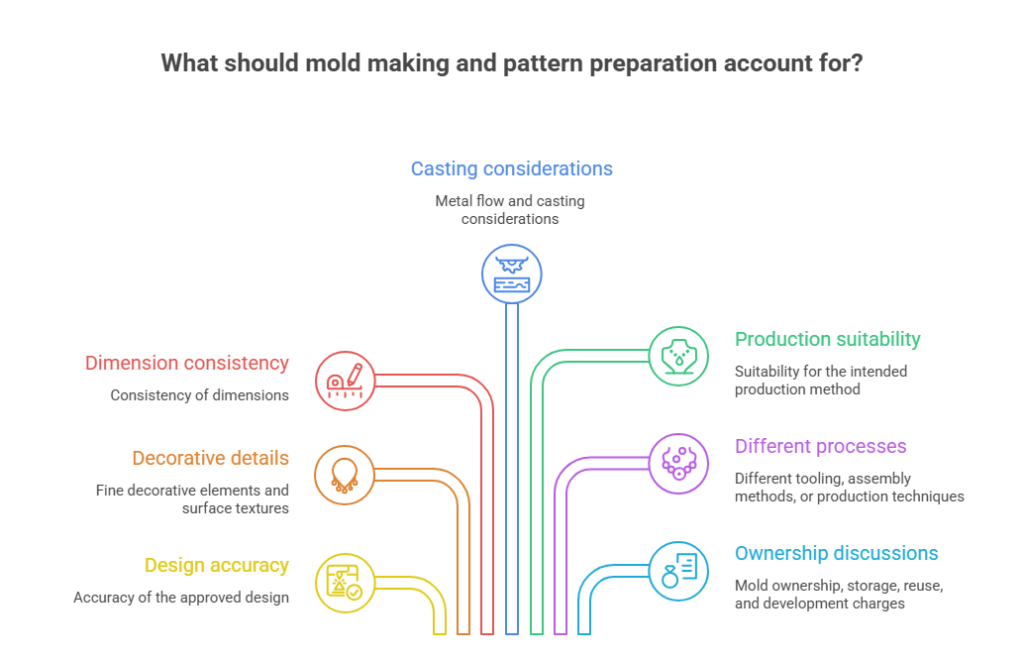
Depending on the project, a manufacturer may also develop a master model or mold for repeat production.
This stage is particularly useful for brands developing a new collection or planning to manufacture multiple units of the same design.
Before proceeding, the manufacturer should confirm whether a physical prototype, a master model, or another development method is appropriate for the project.
Step 4: Selecting Materials and Preparing for Production
The choice of materials influences the appearance, cost, durability, and manufacturing requirements of jewelry.
For example, a jewelry collection may use 925 sterling silver, brass, copper, gold, or other specified materials, depending on the design and product requirements.
Gemstone selection is equally important. Different stones have different colours, shapes, dimensions, and physical properties, which affect how they can be incorporated into a piece.
For gemstone jewelry, the manufacturer should confirm the required stone type, size, shape, colour preferences, and setting requirements before production.
Other details may include:
- Metal purity and alloy requirements
- Gold plating colour and thickness, where applicable
- Surface finish, such as polished or oxidized
- Clasp and fastening specifications
- Chain length and pendant dimensions
- Any applicable testing or certification requirements
These details should be documented clearly rather than left to assumptions.
For B2B buyers, confirming the specifications at this stage helps keep sampling, pricing, and bulk production aligned.
Step 5: Casting or Fabricating the Jewelry
Once the design and materials are confirmed, the jewelry moves into physical manufacturing.
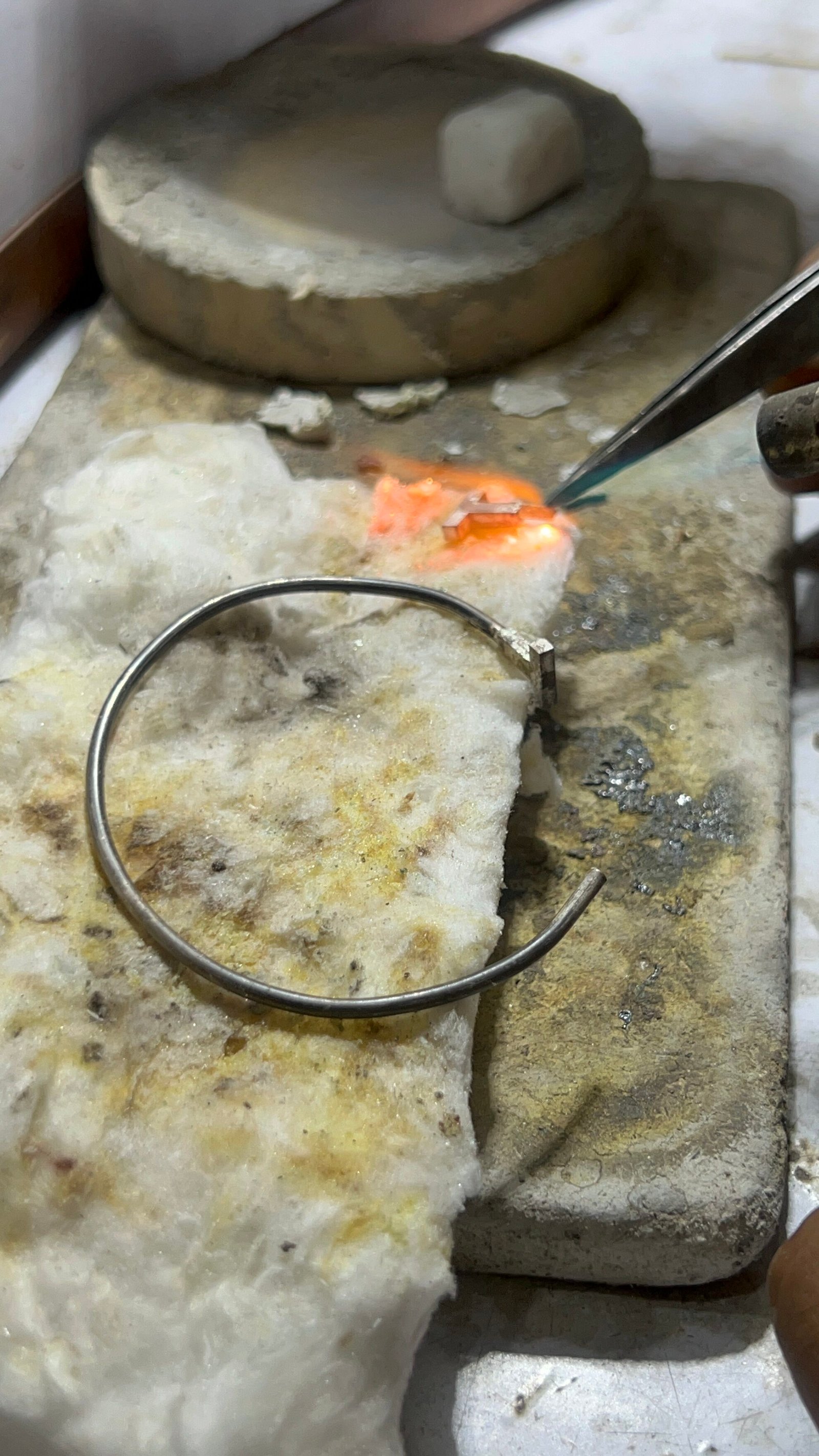
For designs suitable for casting, the approved wax or resin pattern is used to create a mold. The pattern is removed during the casting preparation process, leaving a cavity into which molten metal can be introduced.
After the metal cools, the casting is removed and prepared for further work.
Not every design follows the same route. Some jewelry pieces are fabricated from metal components, while others combine casting, fabrication, and assembly.
The selected method depends on the design’s complexity, quantity, material, and required finish.
At this stage, the jewelry begins to take its physical form, but additional work is still needed to achieve the final appearance.
Step 6: Cleaning, Assembly, and Surface Preparation
After casting or fabrication, the piece may require several finishing operations before gemstone setting.
These can include removing excess material, smoothing surfaces, correcting minor imperfections, assembling components, and preparing the jewelry for its next stage.
For a pendant, this might involve cleaning the metal frame and preparing the bail. For earrings, it could include aligning decorative elements and checking the attachment points.
Careful preparation is important because surface imperfections can become more noticeable after polishing or plating.
The goal is to ensure that the piece is ready for detailed finishing without compromising the original design.
Step 7: Gemstone Setting and Detailed Craftsmanship
Gemstone setting is one of the most important stages in manufacturing gemstone jewelry.
The stone must fit the setting correctly, and the surrounding metal must secure it appropriately. The method depends on the stone, design, and intended appearance.
Common setting styles include:
- Prong setting: Small metal prongs hold the gemstone in position.
- Bezel setting: A metal rim surrounds the stone’s edge.
- Pavé setting: Multiple small stones are placed closely together.
- Channel setting: Stones sit within a metal channel.
- Flush setting: A gemstone is set into a prepared opening in the metal surface.
Each technique offers a different visual effect and requires suitable construction.
For instance, a bezel setting can create a clean, framed appearance around a cabochon gemstone, while a prong setting can expose more of the stone’s surface.
The setting artisan must work carefully to secure the stone while preserving the surrounding metal and the gemstone itself.
For multi-stone designs, the placement, alignment, and consistency of the stones are particularly important.
Step 8: Polishing, Plating, and Final Finishing
Finishing gives jewelry its intended surface appearance.
Depending on the design, this stage may involve polishing, brushing, oxidation, texturing, plating, or other surface treatments.
A high-polish finish creates a reflective surface, while an oxidized finish can emphasize recessed details and decorative patterns.
Gold-plated jewelry may require an additional plating process after the appropriate surface preparation. The specified plating colour and thickness should be confirmed for the individual product.
Finishing must be appropriate for the material and design. Excessive polishing, for example, can soften fine details if not controlled carefully.
For intricate jewelry, maintaining the intended appearance requires attention to both the larger surfaces and smaller decorative areas.
The objective is to achieve a finish that matches the approved design and the product’s specifications.
Step 9: Quality Control Before Delivery
Before jewelry is packed and dispatched, it should be inspected against the agreed requirements.
Quality control helps identify issues that could affect appearance, function, or consistency across an order.
Depending on the product, inspection may include:
- Checking overall dimensions and design details
- Inspecting the metal surface and finish
- Checking gemstone placement and security
- Testing clasps and other functional components
- Reviewing plating or surface treatment
- Checking matching pairs and consistency across batches
- Confirming order quantities and packaging requirements
For B2B orders, quality expectations should be agreed upon before production begins.
A sample approved by the buyer can serve as a useful reference for the bulk order. Keeping the specifications and approvals documented makes it easier to evaluate consistency and manage repeat orders.
Any applicable metal testing, hallmarking, or certification should be discussed according to the product and destination market rather than assumed to be included in every order.
Step 10: Packaging and Preparing the Finished Jewelry for Delivery
Once the jewelry has passed the required checks, it can be prepared for delivery.
Packaging requirements vary between clients. Some brands need individual product packaging for retail sales, while others require bulk packing for distribution or further processing.
Before dispatch, the manufacturer and buyer should confirm the quantities, packaging instructions, shipping arrangements, and any necessary documentation.
For international B2B orders, it is also helpful to discuss the destination country, shipping method, applicable customs requirements, and expected delivery arrangements in advance.
Clear communication at this stage helps ensure that the finished products are prepared according to the buyer’s requirements.
How Long Does Custom Jewelry Manufacturing Take?
The timeline depends on the complexity of the design, material availability, sampling requirements, approval stages, and production quantity.
A straightforward design may require fewer development steps than a detailed piece involving multiple gemstones, intricate metalwork, or special finishing.
The overall timeline typically includes:
| Stage | What Influences the Timeline |
|---|---|
| Design development | Complexity and availability of design references |
| CAD modeling | Level of detail and revision requirements |
| Sampling | Prototype method and material availability |
| Manufacturing | Design complexity and order quantity |
| Stone setting and finishing | Setting style and surface treatment |
| Quality control and dispatch | Inspection, packaging, and shipping arrangements |
There is no single timeline that suits every custom jewelry project. A realistic schedule should be confirmed after reviewing the design, specifications, and quantity.
For this reason, buyers should discuss deadlines at the beginning of the project and allow sufficient time for sample approval and any necessary revisions.
What Should You Look for in a Custom Jewelry Manufacturer?
Choosing a manufacturing partner is an important decision for jewelry brands. The right partner should understand both the creative direction and the practical requirements of producing jewelry consistently.
Consider the following factors before starting a project.
Design development support: Can the manufacturer work from sketches, reference images, or existing samples?
Material clarity: Are the proposed metals, gemstones, plating specifications, and other materials clearly defined?
Sampling and approval: Is there a clear process for reviewing designs and approving samples before bulk production?
Manufacturing capabilities: Can the manufacturer support the techniques and finishing requirements needed for the product?
Quality control: Are inspection procedures and acceptance criteria discussed before production?
Communication: Are pricing, minimum order quantities, development charges, timelines, and revisions explained clearly?
Confidentiality: If the design is proprietary, can the manufacturer agree to appropriate confidentiality and intellectual property terms?
A reliable manufacturing relationship is built on clear specifications, realistic expectations, transparent communication, and mutual agreement at every important stage.
Why Work with Shri Shyam Gems & Jewellery?
At Shri Shyam Gems & Jewellery, we work in jewelry manufacturing with an understanding of the care required to transform a design concept into a finished product.
With 15 years of industry experience and a team of 200 artisans and 50 office staff, our business combines manufacturing expertise with the coordination needed to support jewelry development and production projects.
We work with the goal of helping jewelry businesses translate their ideas into products that reflect their design requirements.
Whether you are developing a new collection, refining an existing design, or exploring custom gemstone jewelry, the first step is to discuss your concept and manufacturing needs.
For B2B projects, it is helpful to share reference images, target quantities, preferred materials, gemstone specifications, and expected pricing. These details allow the project requirements to be reviewed before a quotation and development plan are finalized.
Our approach emphasizes clear communication and careful planning so that design expectations, manufacturing requirements, and production decisions remain aligned.
Frequently Asked Questions
Can I manufacture jewelry from a hand-drawn sketch?
Yes. A hand-drawn sketch can be a starting point for a custom jewelry project. Reference images, approximate dimensions, gemstone details, and material preferences help the manufacturer understand the concept and evaluate how it can be developed.
Do I need a CAD file to start a custom jewelry project?
Not necessarily. You can begin with a sketch, reference photograph, or existing sample. A CAD file may be developed during the design stage if the project requires it.
Can I request changes after receiving the CAD design?
Design revisions may be possible before final approval. The number of revisions included, any additional development charges, and the process for approving the updated design should be agreed upon with the manufacturer.
Is sampling necessary before bulk production?
Sampling is often recommended for new designs because it allows the buyer to assess the physical product before committing to a larger quantity. The need for sampling depends on the project, complexity, and production requirements.
What information should I provide to receive a manufacturing quotation?
Share your design references, preferred material, gemstone details, dimensions, target quantity, finish requirements, and target budget. Also mention whether you need CAD development, sample production, or bulk manufacturing.
Can a jewelry manufacturer help develop a complete collection?
A manufacturer may be able to support multiple designs for a collection, depending on its capabilities and the project’s requirements. Share the number of designs, expected quantities, materials, and target launch date so that the scope can be evaluated.
Conclusion
Turning a sketch into finished jewelry involves much more than making an attractive design. It requires careful planning, accurate design development, appropriate material selection, skilled manufacturing, precise gemstone setting, and consistent quality control.
Each stage contributes to the final product, and early communication helps prevent avoidable changes later in the process.
For jewelry designers, retailers, and growing brands, working with an experienced custom jewelry manufacturer in India can help make the development process more organized and predictable.
At Shri Shyam Gems & Jewellery, we welcome conversations with businesses looking to develop custom jewelry and gemstone designs. Share your concept, preferred materials, and production requirements to begin discussing your next project.
Ready to turn your jewelry sketch into a finished product? Contact Shri Shyam Gems & Jewellery to discuss your custom jewelry manufacturing requirements.

Leave a Reply