
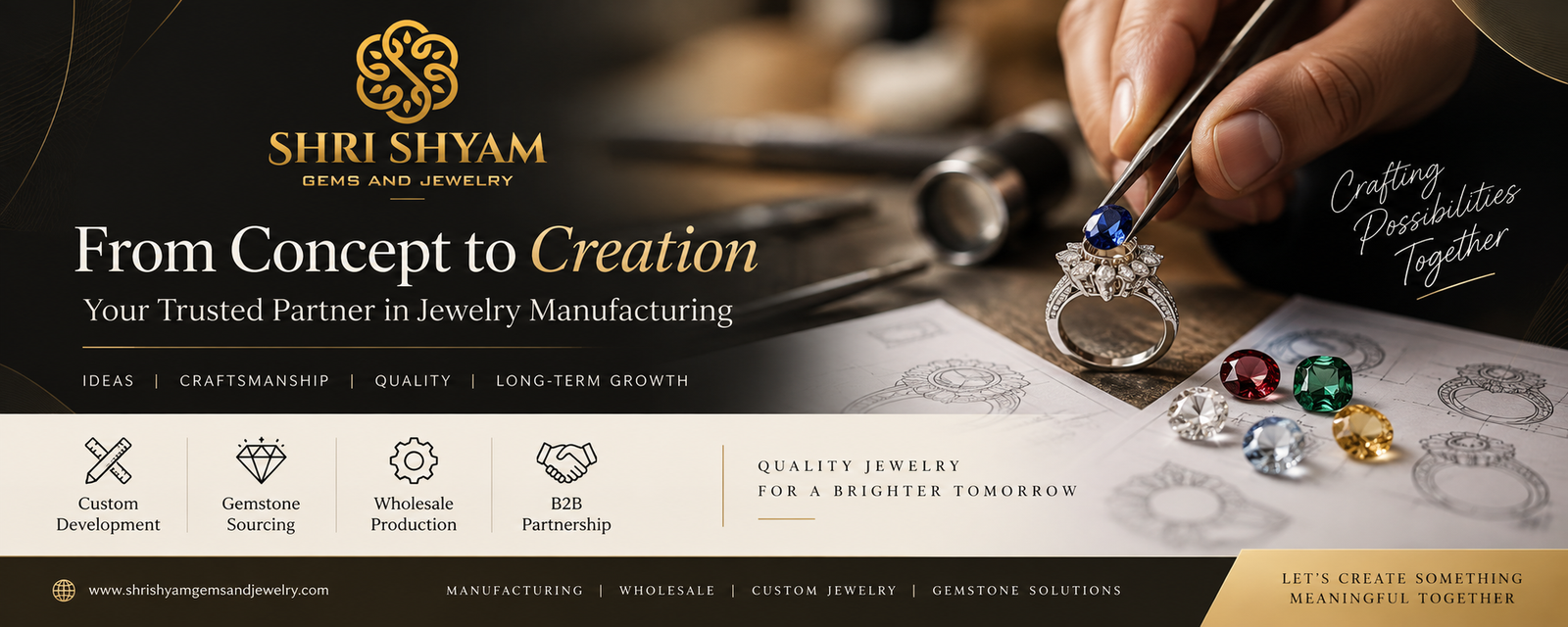
How to Choose the Right Jewelry Manufacturer for Your Business
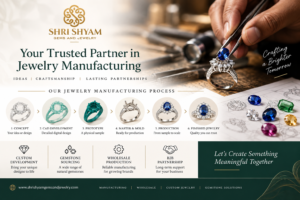
Choosing the right jewelry manufacturer can make a big difference to the growth of a jewelry brand. Whether you are a retailer, online jewelry business, designer, or wholesale buyer, your manufacturing partner plays an important role in turning product ideas into finished jewelry.
With so many suppliers and manufacturers available, it can be difficult to know where to begin. Price is important, but it should not be the only factor. Design development, communication, production capabilities, gemstone sourcing, sampling, and consistency are also important when building a long-term business relationship.
In this guide, we explain some of the key things to consider when choosing a jewelry manufacturer for your business.
What Does a Jewelry Manufacturer Do?
A jewelry manufacturer helps transform jewelry designs or product concepts into finished pieces.
Depending on the project, the process may involve design development, CAD, prototypes, master models, molds, gemstone sourcing, production, finishing, and quality checks.
For a jewelry brand, working directly with a manufacturer can also provide more opportunities to develop products according to specific design and business requirements.
1. Understand Your Jewelry Requirements First
Before contacting a manufacturer, be clear about what you need.
Consider questions such as:
What type of jewelry do you want to produce?
Do you need ready-to-order wholesale designs or custom jewelry?
What gemstones will be used?
What quantities do you expect to order?
Do you already have CAD files or design drawings?
Do you need help developing the design?
What market or customer group are you targeting?
Having clear requirements makes it easier to communicate with potential manufacturing partners and compare their capabilities.
2. Look for Custom Jewelry Development
For jewelry brands that want original products, custom development can be an important part of manufacturing.
A design may begin as a sketch, reference image, or product idea and then be developed into a production-ready piece.
Depending on the project, the development process can include:
Concept → CAD → Prototype → Master → Mold → Production
Each stage gives the buyer an opportunity to review the design and make sure the product is moving in the intended direction.
Custom development can be especially useful for brands creating their own collections instead of selling generic products.
3. Ask About Gemstone Sourcing
Gemstones are an important part of many jewelry collections. If your products depend on gemstones, discuss sourcing requirements with the manufacturer before beginning production.
You may need to specify:
Gemstone type
Shape
Size
Color
Quantity
Quality requirements
Treatment information, where applicable
Certification requirements, where applicable
The exact specifications should always be confirmed before production. This helps avoid misunderstandings and ensures that both the buyer and manufacturer have the same expectations.
4. Check Minimum Order Requirements
Minimum Order Quantity, commonly called MOQ, is another important consideration for wholesale jewelry buyers.
MOQ can vary depending on the design, materials, customization, and production requirements.
If you are a growing jewelry brand, ask about MOQ before investing significant time in product development. Understanding the minimum production requirement can help you plan your inventory and budget more effectively.
5. Review Samples Before Production
A sample gives you the opportunity to examine a jewelry design before moving forward with larger production.
During the sample stage, pay attention to:
Overall design
Proportions
Stone placement
Finishing
Construction
Wearability
Details and appearance
For custom jewelry, sample approval is particularly useful because small design changes can sometimes make a significant difference to the finished product.
6. Communication Is Part of Quality
Good communication is often overlooked when choosing a jewelry manufacturer.
A successful manufacturing project requires clear communication about designs, materials, quantities, timelines, samples, packaging, shipping, and other requirements.
A manufacturer may have strong production capabilities, but if project details are not communicated clearly, misunderstandings can occur.
For this reason, choose a manufacturing partner who understands your requirements and communicates the production process clearly.
7. Don’t Choose a Manufacturer Based Only on Price
Comparing prices is a normal part of wholesale purchasing, but the lowest quotation is not automatically the right choice for every business.
Instead of looking only at the unit price, consider the complete value of the manufacturing relationship.
Look at:
Product development support
Manufacturing capabilities
Sample process
Material sourcing
Communication
Production consistency
Order requirements
Delivery expectations
The right choice depends on your specific business requirements and the type of jewelry you plan to manufacture.
Jewelry Manufacturing for B2B Businesses
Shri Shyam Gems & Jewelry works with businesses looking for jewelry manufacturing, wholesale supply, custom development, gemstone sourcing, and B2B jewelry solutions.
For custom projects, the development process can include stages such as CAD design, prototype development, master creation, and mold development, depending on the requirements of the project.
This approach allows jewelry businesses to develop products from an initial concept toward a finished design suitable for production.
Why Work With a Jewelry Manufacturing Partner?
A reliable manufacturing relationship can become an important part of your overall jewelry business.
Instead of treating manufacturing as a one-time purchase, businesses can develop an ongoing relationship for:
New collection development
Custom jewelry
Wholesale production
Product sampling
Gemstone-based designs
Repeat orders
Collection expansion
As your business grows, having a manufacturing partner who understands your product requirements can make future development more organized.
Final Thoughts
Finding the right jewelry manufacturer requires more than comparing prices.
Before starting a project, take time to understand the manufacturer’s capabilities, custom development process, gemstone sourcing options, MOQ, sample procedure, communication, and production requirements.
A clear manufacturing process helps reduce misunderstandings and gives your business a better foundation for developing jewelry collections.
If you are looking for jewelry manufacturing, wholesale jewelry, custom jewelry development, or gemstone sourcing for your business, Shri Shyam Gems & Jewelry can discuss your requirements and explore suitable production solutions.
Have a jewelry design or product idea? Get in touch with Shri Shyam Gems & Jewelry to discuss your B2B manufacturing requirements.